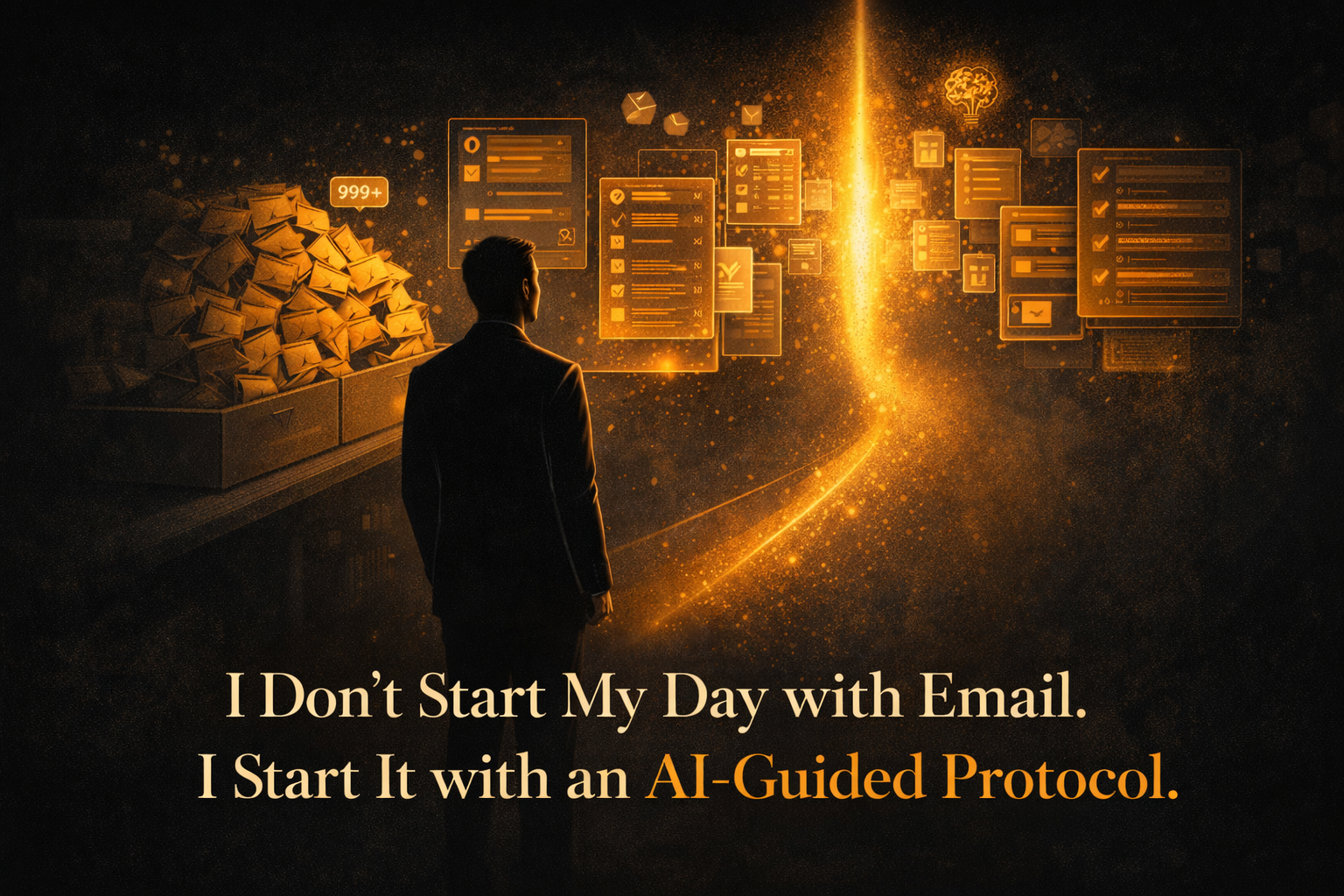
I get over 200 emails a day across multiple ventures. Media operations, press distribution, investment activity, consulting. Each one generates its own stream of communication, and all of them flow into the same inbox. For years, my morning started with email. Open the inbox, scroll, triage mentally, respond to what seemed urgent, flag what seemed important, let the rest pile up. On a good day, this took 45 minutes. On a bad day, it was closer to two hours. And that was before I’d started any actual work.
The problem wasn’t volume alone. It was composition. Out of 200+ daily emails, most were noise. Research digests and newsletters I’d subscribed to at various points, each one valuable in theory and collectively overwhelming in practice. Automated alerts from monitoring scripts. Default check-in emails from hotels for upcoming trips that didn’t require any action. Team-copy emails I was CC’d on for awareness but didn’t need to read. Bouncebacks from a dormant domain. Automated status updates from tools. Layer after layer of emails that had no action required, mixed in with the handful that genuinely needed my attention.
I built a triage system in Cowork that applies rules-based sorting to my inbox. The system categorizes every email into three buckets.
Auto-ignore: newsletters, research digests, automated monitoring alerts, hotel default check-in emails, team-copy distribution emails, dormant domain bouncebacks, and similar automated or low-priority messages. These get processed without me seeing them. Not deleted. Processed. Archived, labeled, and moved out of the primary inbox.
Priority flag: flight changes or cancellations (these can cost money if missed), payment and billing issues, and direct business communications that require a response from me specifically. These get surfaced immediately.
Everything else: triaged by sender importance and action required, then presented in a daily summary.
The first morning I ran the system, my inbox went from 200+ to 2 actionable items. Two. The other 198 were either auto-processed or queued for review in the summary. I stared at the screen for a moment because it felt like something must be broken. It wasn’t. The 198 emails were all legitimately non-urgent. They’d been consuming my attention every morning not because they needed it, but because they were there.
Of course, specialized AI email tools exist for this. Products built specifically for email management, with their own interfaces, their own AI, their own subscription fee. I chose not to use them, and the reason connects to something I’ve been writing about: the focused stack approach. My email triage runs inside the same AI ecosystem as my task management, my project workflows, my daily routines, and my strategic thinking. The AI that processes my email also knows what I’m working on this week, what my priorities are, which clients are active, and what deadlines are coming. That context makes the triage smarter than any standalone email tool could be, because the email tool doesn’t know that the message from Chris is about a property deal that’s closing Friday, but my AI system does.
That’s the ecosystem effect I keep coming back to. Not one tool for email, another for tasks, another for scheduling. One system that sees all of it. It learns from everything. It becomes a personal operating system rather than a collection of specialized apps that don’t talk to each other.
The triage rules themselves are simple. The power isn’t in the rules. It’s in the consistency. The system runs every morning before I open my inbox. By the time I look at email, the noise is already gone. The decisions about what’s noise and what’s signal were made once, codified into rules, and now execute automatically. I update the rules periodically when new patterns emerge (a new newsletter I subscribed to, a new automated report that started), but the core structure has been stable for weeks.
I should mention what this doesn’t do. It doesn’t auto-respond. It doesn’t compose replies. It doesn’t delete anything. Those are decisions I want to keep making myself. The system handles triage, classification, and summarization. The human handles judgment, response, and relationship. That split feels right to me. Maybe the next version will be more autonomous. For now, the time savings from just removing the noise are significant enough that I’m not reaching for more.
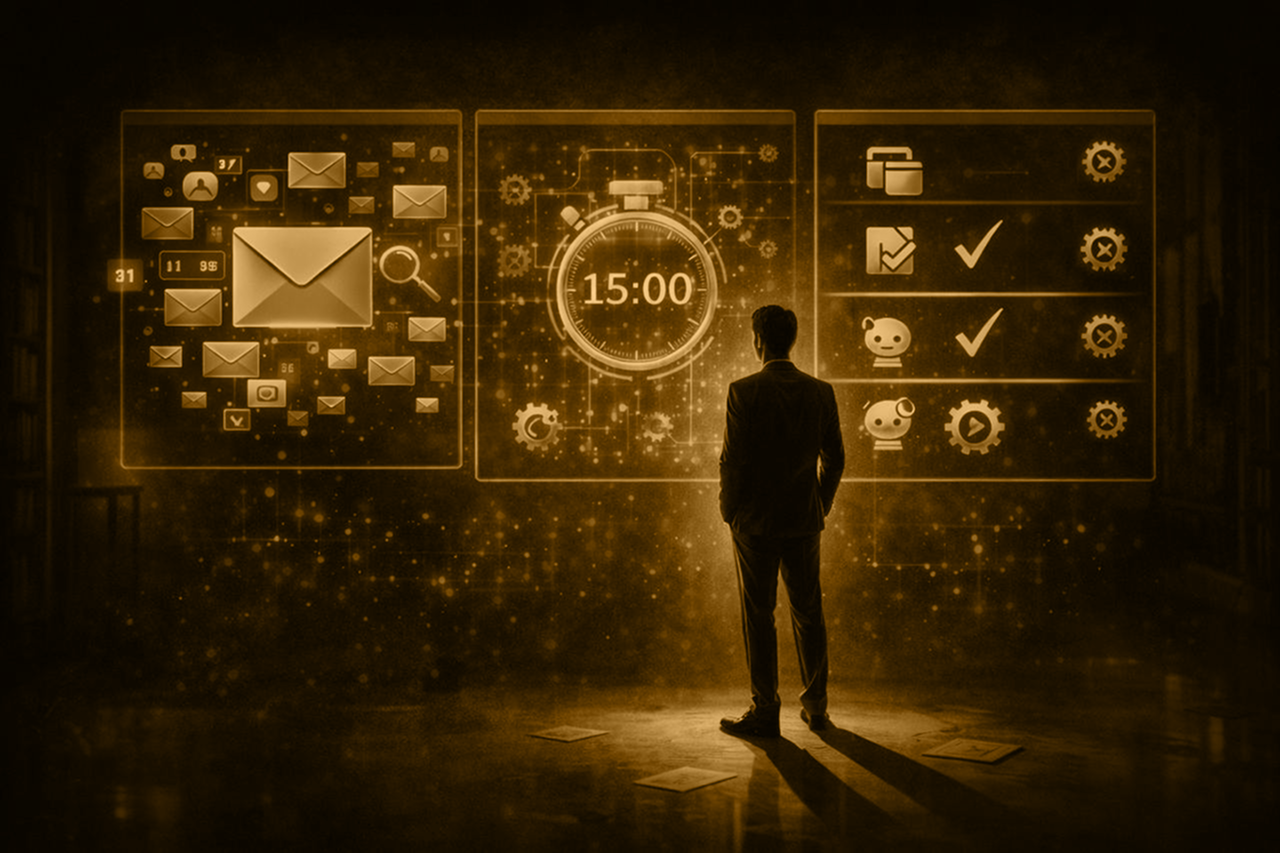
15 minutes. That’s my current email processing time on most mornings. Down from 45 minutes to two hours. On a per-year basis, that’s somewhere between 100 and 300 hours saved. I’d rather spend those hours building things than reading research digests I subscribed to in 2023.