At nearly every crypto conference this happens every few months someone stands up and says wallets are going to replace banks. The crowd nods. Nobody runs the numbers.
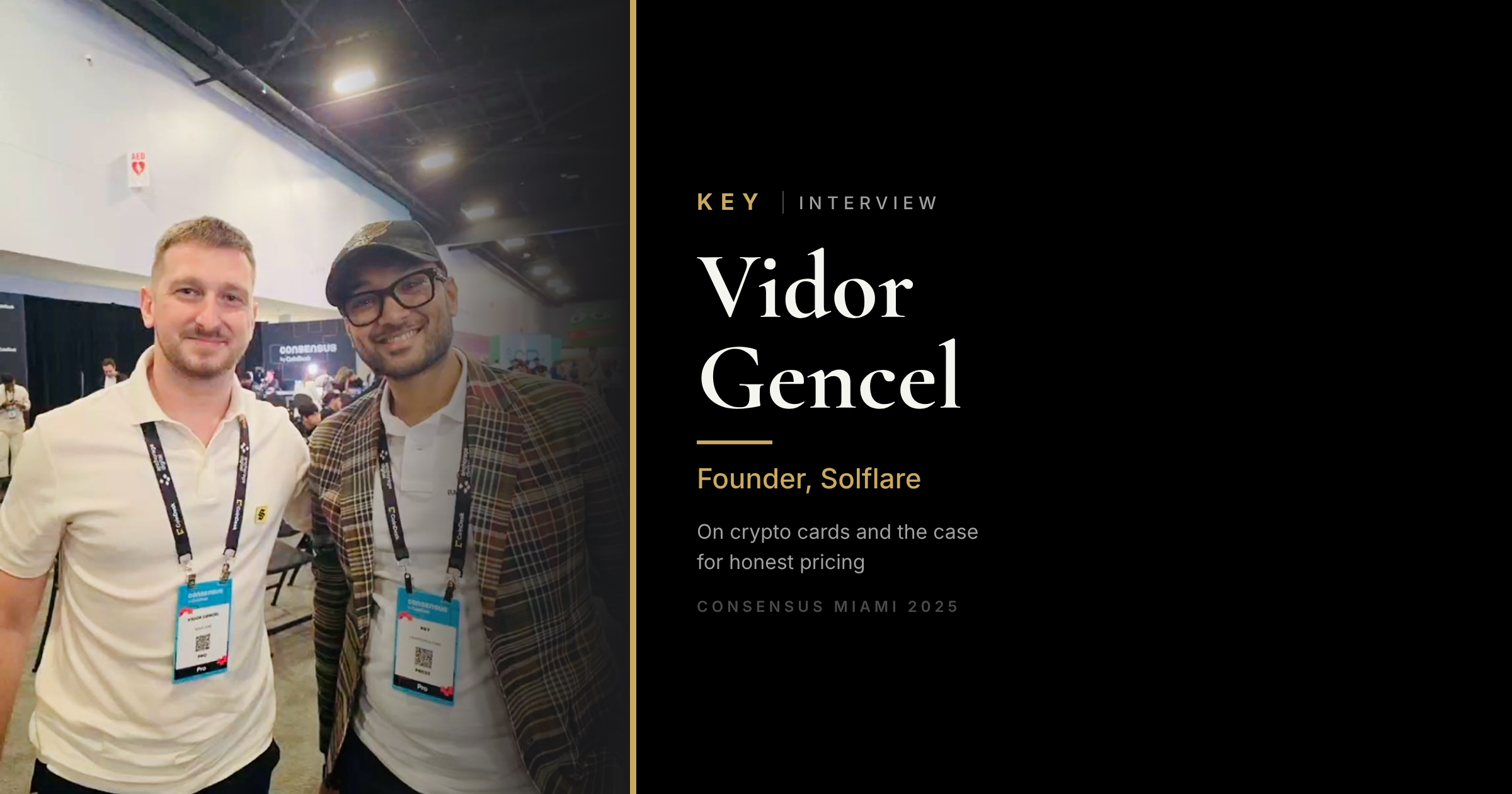
During Consensus Miami, I had a chat with Solflare’s founder Vidor Gencel. His organization receives more than 4 million monthly active users. They launched a mastercard debit card just recently. There were many reasons he could sell me the banking dream.
He did not.
He unprompted also said, “Crypto wallets are going to replace banks or neobanks soon is just very delusional.”
I appreciated that. So let us start there.
That cashback number is not the number that counts
For example a card claims gives two percent cashback. You use USDC to buy something in euros. The cashback posts. Feels like a win.
What you likely did not see is the FX fee lurking underneath. Not so specific, however, and Vidor points out that because some cards add on for a 3–4% charge on foreign currency conversions but give 2% in cashback. You are down 1% on net. You came in for the reward headline. The FX fee is the house’s profit margins.
He was not picking on Bybit, but rather using them as an example of how the structure works. The card provider is then making 1% on everything you spend abroad as they quietly engage in a 3% FX charge with, from your perspective, only getting 2% cashback back. You feel rewarded. You are being charged.
Big banks like JPMorgan can create real cashback programs because of the merchant fees themselves that most crypto issuers just don’t have. So the reward has to be from somewhere. More often than not it comes from the user, in the form of a fee that they were not even aware was being deducted.
Solflare’s answer is to drop the performance entirely. Free to issue. Free to onboard. Free KYC. One flat 1% FX fee when you spend outside dollar currencies, stated upfront. No cashback headline. No cost buried in the fine print. Vidor said it simply: the math should be easy to understand
It is a less exciting pitch. It is also the honest one.
Who is a crypto card really for?
Vidor wasn’t attempting to convince me the product is intended for all people. That itself was interesting.
His use case is very niche and thought out. The card eliminates a particular friction, if you already hold USDC, get paid in stablecoins or trade on a regular basis. You do not have to snowball money into a bank account, time-settlement, and pay a conversion fee on the way out. You can only draw on coins you already have in the wallet you live from. It pulls people deeper into the Solflare ecosystem instead of pushing them toward another app.
That s a real problem for which you have found the solution of some human beings. This is not just the replacement of a bank.
He said another thing that stayed with me. Retention is very strong for users who perform more than two transactions. And that comes off sounding well and it is. But it also tells you, quietly, about the ceiling. The people that try the card one time and rotate probably did not have a business case for being there in the first place. In short, the product serves the people for whom it is built. It’s simply not meant for everyone.
The Story Of Why And How To “Replace Your Bank” Never Dies
Vidor had his finger on the pulse of the cycle. Runs of meme coins attract new money into the crypto. Those people who are sitting on gains start to be on the lookout for a place to put them, some purchasing decision to make with the existing balance. The banking conversation restarts. Cards get announced. Accounts get launched. The dream sounds reasonable again.
But peel away the product and what lies below are the same rails underneath as they always were. Banking partners. AML checks. KYC. Those are the same risk questions a traditional bank would ask, because at some point in the chain there has to be a place where that user will need approval within a list of approved uses. Congress does not lose that layer because of crypto. It simply places the logo on it.
Solflare is also sticking with a Solana-only approach, while competitors like Phantom have opened up support for multiple chains. Vidor was unsentimental about this. Chains from additional ecosystems often give wallets who gave it a go less than 5% of their total revenue. Solana is fast and cheap, it deals with the things that really matters : trading, payments, remittance. The economics don’t change enough to justify the complexity of getting any wider.
An insight from the market place on what honesty sounds like.
The crypto card space is loud right now. Binance has one. Exchanges have them. Wallets are building them. Most are selling some version of the same story.
Vidor is constructing a card and that story you have largely correct. That is a harder sell. That is a probably better business! For the proper person, a product that works correctly holds onto them. Everybody puts up with a product that sells too much, and loses quietly.
Nobody is putting a 1% FX fee on a billboard. But it is the real number. In front of it is only the cashback headline.